IONM services
Intraoperative Neuromonitoring That Supports Critical Decisions.
An overview of intraoperative neurophysiological monitoring, how it works, and how it supports the surgical team.
What is IONM
Real-time insight into nervous system function.
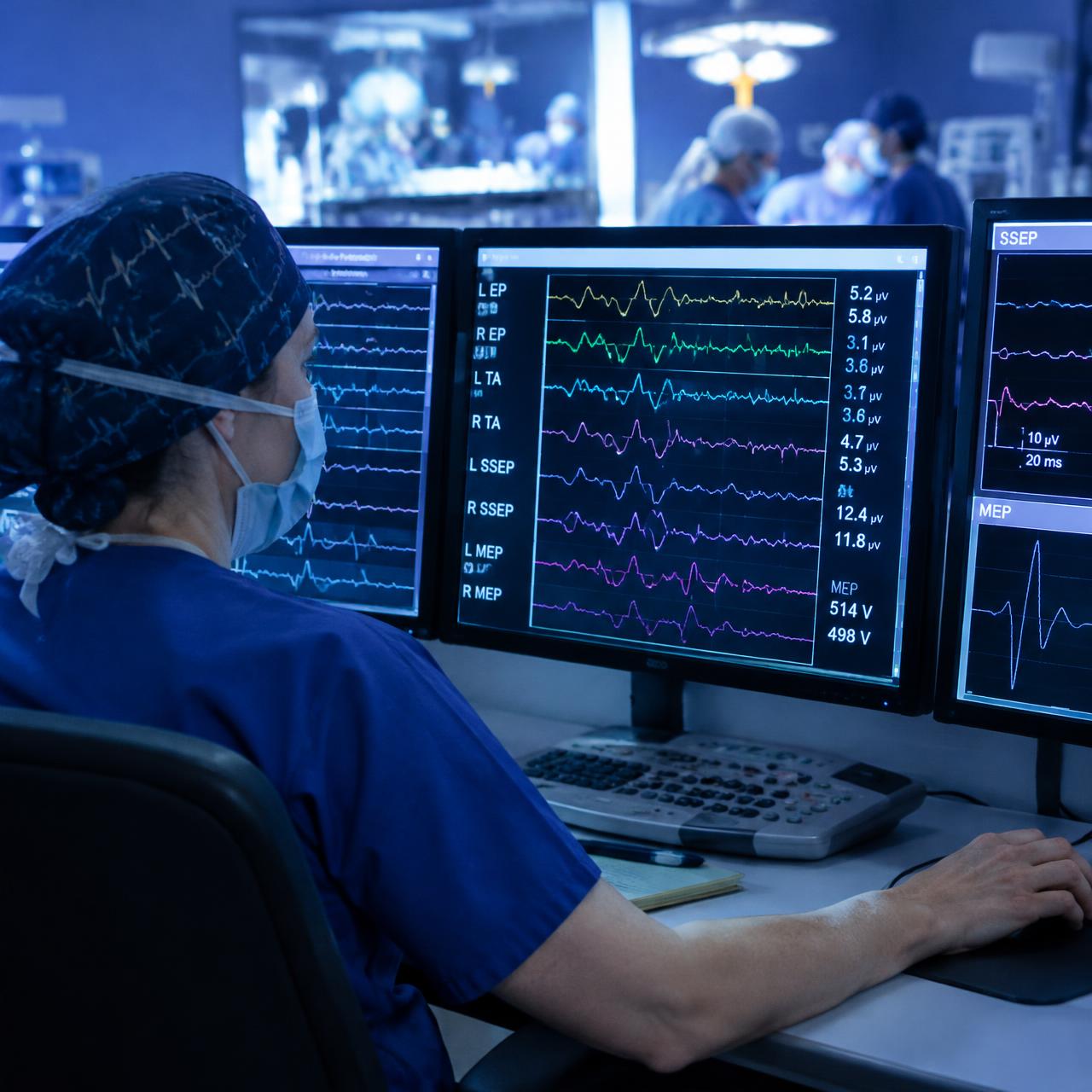
Intraoperative neuromonitoring (IONM) uses neurophysiological testing during surgery to assess the functional integrity of the brain, spinal cord, and nerves while a procedure is underway.
It is used in procedures where neural structures may be at risk. By identifying changes that may indicate neurological stress, IONM gives the surgical team additional information to consider when making decisions.
IONM can help identify changes that may indicate neurological risk. It does not guarantee the prevention of injury or any specific surgical outcome.
How it works
From baseline to real-time communication.
01
Pre-case planning
The monitoring plan is discussed with the surgeon and anesthesia provider, including modalities and anesthetic considerations.
02
Setup & baselines
Electrodes are placed and baseline responses are recorded before the critical portions of the procedure.
03
Continuous monitoring
Signals are observed throughout the case and compared against baselines.
04
Communication
Meaningful changes are communicated promptly and clearly so the team can evaluate possible causes.
Monitoring modalities
Common modalities, explained.
Clinical interpretation
Signals need context.
Waveforms change for many reasons, including anesthesia, temperature, blood pressure, positioning, and technical factors. Interpretation weighs these factors so the information communicated to the surgeon is meaningful.
How hospitals evaluate IONM partners
- Qualifications and credentialing of monitoring personnel
- Approach to clinical interpretation and professional oversight
- Communication standards in the operating room
- Scheduling, coverage, and case-planning processes
- Equipment, documentation, and quality practices
- Fit with the program's surgical case mix
Discuss your program's monitoring needs.
Connect with Mountain West Neuro to discuss your surgical program's neuromonitoring needs.